From Bernice Feeds Six on YouTube
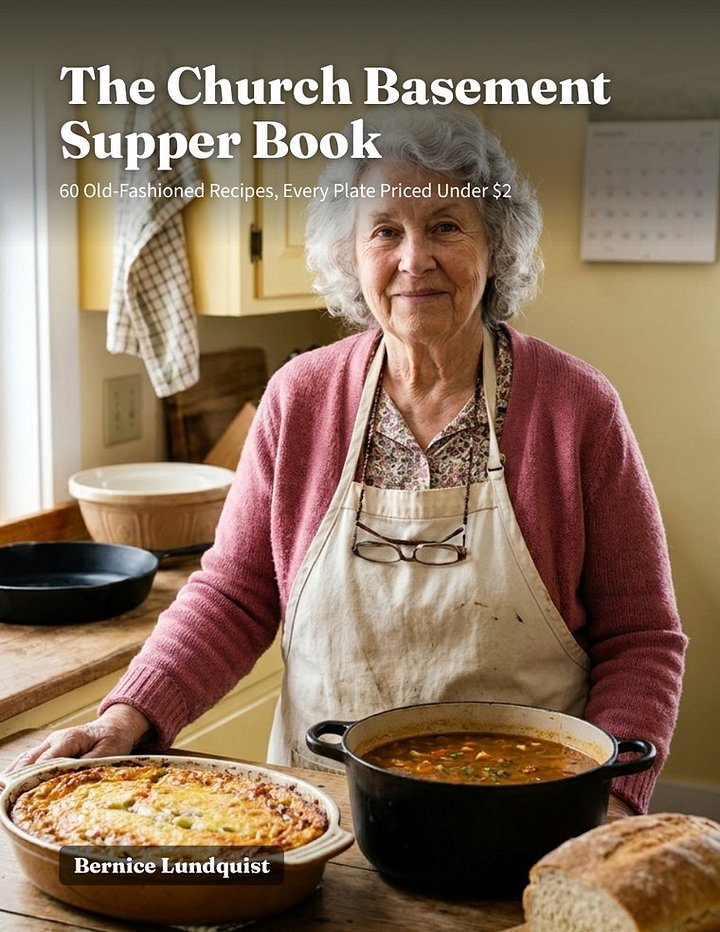
60 old-fashioned recipes, every plate priced under $2
Church-basement suppers, soups and hotdish for families and one-person kitchens, with the cost of every plate worked out, a 4-week supper plan and a shopping list for each week.
Get the book- Instant PDF download, nothing ships
- Prints on plain paper, large print
- Works on phone, tablet and computer

Does this sound familiar?
The grocery bill went up again and the pension did not.
I cook for one now and I still make enough for twelve.
I buy the beef, I buy the cheese, and I still do not know what supper costs.
Every recipe says it is cheap. None of them shows the math.
There is no shortage of cheap-supper tips. That is the trouble. Most of them never show a price. This book gives you one real recipe for each supper, the cost of every plate, and the government price source behind the number, so you can check it yourself.
What you get
- The Church Basement Supper Book (PDF)60 old-fashioned recipes in 6 parts, each with serves, cost per plate, ingredients, method, 'if it goes wrong' and 'stretch it'.
- A price on every plateEvery recipe shows the whole price and the price per plate, from U.S. Bureau of Labor Statistics averages for September 2026 and USDA figures. The most expensive plate is $1.72; 41 of the 60 are under $1.
- 4-week supper plan with shopping listsFive cooking nights and two leftover nights a week for a family of four, with a shopping card and the week's cost for each of the 4 weeks.
- 9 printable cardsSafe temperatures, cooling and storing, dried beans the easy way, the plate-price formula, the pantry list and the 4 weekly shopping lists.
- Quick index and pantry listFind supper by what you have: a pound of beef, a bag of beans, day-old bread, 30 minutes, or $10.
- Freezer notes and a supper trackerWhat freezes well, for how long, and a page to log what you really paid.
Look inside
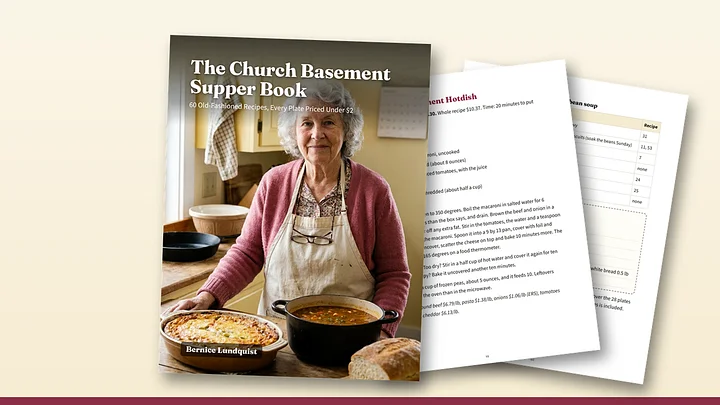
Real pages from the finished book. Tap a page to see it full size.
 A recipe page: Brown Beans and Rice, serves 8 at 48 cents a plate, with ingredients, method, 'if it goes wrong' and 'stretch it'.
 'How the Prices Work': every price used, with its source and month (U.S. Bureau of Labor Statistics and USDA).
 The four-week plan: Week 1's suppers and the week's shopping card, with the cost.
 The Safe Temperatures card from the Cooking Safely chapter (ground beef 160, casseroles 165, leftovers 165).
Checked, not guessed
Prices: U.S. Bureau of Labor Statistics Average Price Data (September 2026) and USDA Economic Research Service fruit and vegetable prices (2023). Safe temperatures and storage times: FoodSafety.gov. Dried beans: University of Nebraska-Lincoln Extension and Utah State University Extension.
Every price and every safety number in the book has its source and date listed in the Sources chapter. The prices are U.S. averages, so yours will differ. The one price that is not from a published source is a flat 15 cents a recipe for salt, pepper and spices, and the book says so.
This book is about cooking and grocery budgeting. It is not medical, nutrition, legal or financial advice. If you have a food allergy or a health condition, ask your doctor.
A note from Bernice
I'm Bernice. I raised five children on a Minnesota farm, and I have cooked for my church's suppers and funerals for fifty years. I'm not a chef. I learned from my mother, the church ladies and a grocery envelope that never had quite enough in it. When prices climbed, my grandchildren asked what a supper really costs, so I started pricing every plate. This book is those recipes with the numbers worked out and the sources listed, so you do not have to take my word. My promise is simple: nobody leaves the table hungry.
Bernice Lundquist is an AI character created for this channel.